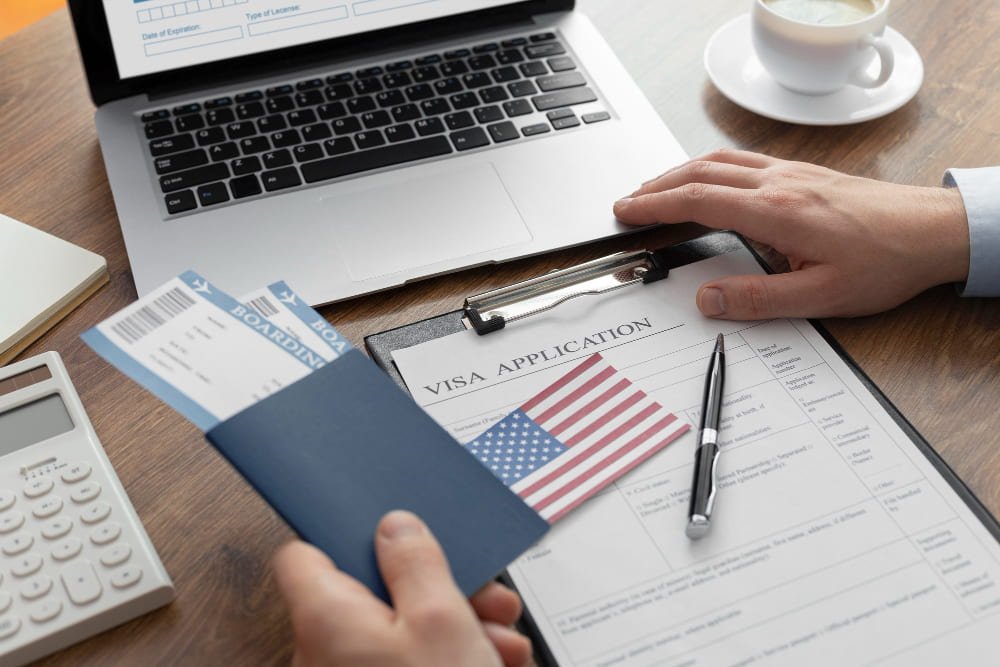
From false promises of expedited green cards to fake job offers and unauthorized legal assistance, scammers exploit the vulnerable, often preying on hope and desperation. Understanding the common tactics used in these scams is crucial to protecting yourself and your family. This guide aims to shed light on the prevalent fraudulent activities within the various phases of U.S. immigration, empowering you to recognize and avoid these pitfalls.
Individuals Posing as Government Officials
Exercise caution when encountering individuals who claim to be USCIS officials. USCIS communication is strictly through official government channels and excludes personal social media platforms.
False Promises of Immigration Assistance
Be cautious of online or social media offers to act as a supporter for a fee or information. Legitimate supporters provide financial aid for up to two years of parole, without expecting repayment or service. Remember, you’re not obligated to any form of compensation in exchange for their support or the I-134A form submission. For details on potential exploitation, review the ‘Understand Your Rights‘ guide.
Scams Targeting CHNV Immigration Processes
CHNV beneficiaries are never required to compensate their supporters for filing Form I-134A or providing financial aid in the U.S. These processes are free; no U.S. government fees are involved. Be wary of anyone demanding payment. DHS advises:
- Reject offers promising quick U.S. entry for a large fee.
- Retain control of your passport and ID.
- Verify the legitimacy of your Form I-134A filer via the “Scams, Fraud, and Misconduct” webpage.
Human Trafficking
Human trafficking involves forcing someone, through fear or deception, into labor, services, or sexual acts. If you’ve witnessed or experienced this abuse, immediately contact the National Human Trafficking Hotline at 888-373-7888.
False Job Offers
Exercise caution with overseas or email job offers from U.S. companies. Be especially wary if asked to pay for a job offer. Verify company legitimacy before sharing personal details from social media job posts.
Remember, you cannot legally work in the U.S. without a Green Card, Employment Authorization Document (EAD), or a work-authorized visa. Check our “Employment Immigration” at Practice Area for details.
If on a student visa, discuss any potential employment with your designated school official. Graduating students applying for Optional Practical Training should also review the our “Employment Immigration” instructions.
Re-Registration Scams Regarding TPS
Wait for official USCIS Federal Register notices before paying or submitting any Temporary Protected Status (TPS) re-registration forms for your country. Check our “Humanitarian Immigration” page at Practice Area for details.
Online Immigration Scams: Social Media, Email, Websites
Be cautious of social media pages, email offers, and websites claiming USCIS affiliation. Verify that web and email addresses end in ‘.gov.’ Official USCIS social media accounts are on Twitter, Instagram, YouTube, Facebook, and LinkedIn.
Avoid Payments by Phone or Email
USCIS never requests money transfers to individuals. We do not accept Western Union, MoneyGram, PayPal, Venmo, or gift cards for immigration fees. Payment by phone or email is also prohibited. Online payments are accepted only through your USCIS online account and Pay.gov.
“Notarios Públicos”
It’s crucial to understand the significant difference in meaning between the term ‘notario público’ in many Latin American countries and ‘notary public’ in the United States. In numerous Spanish-speaking nations, a ‘notario’ is a highly qualified and influential attorney, possessing specialized legal credentials and extensive legal authority. However, in the U.S., a notary public is an individual authorized by state governments to witness the signing of crucial documents and administer oaths. They are not, by virtue of their notary status, authorized to provide legal counsel or represent individuals in legal matters, especially concerning complex immigration law.
Specifically, a ‘notario público’ in the U.S. is strictly prohibited from offering any form of legal services related to immigration. Only licensed attorneys or accredited representatives working for organizations recognized by the Department of Justice (DOJ) are permitted to provide legal advice and representation in immigration matters.
Therefore, you must exercise extreme caution when dealing with individuals who claim to be immigration attorneys, as they may be unlicensed or disbarred. To protect yourself, it’s essential to verify the credentials of anyone offering legal assistance. The Department of Justice provides valuable resources to help you find legitimate legal representation and avoid fraudulent practitioners. Please refer to the following DOJ websites for further information:
- Recognition & Accreditation Program: For information on accredited representatives.
- Currently Disciplined Practitioners: To check if an attorney has been subject to disciplinary action.
- Find Legal Representation: To locate qualified legal assistance.
Visa Lottery Scams: False Wins
USCIS does not administer the Diversity Immigrant Visa (DV) Program, or visa lottery. The U.S. Department of State handles this.
Visit the State Department’s DV website for program details, entry requirements, and notification procedures. The DV Program is free; the State Department will not email selection notices. For information on the process if selected, see the Diversity Visa page.
Fraud Targeting International Students
International students seeking U.S. education must apply to accredited colleges or universities. A Form I-20 is required for travel. Upon acceptance to a SEVP-certified school, you’ll receive either an F-1 (academic/language) or M-1 (vocational) Form I-20. Unaccredited schools cannot sponsor F-1 visas.
For Form I-20 details, visit studyinthestates.dhs.gov or our “Student Visa” page at Practice Area. The DHS “Study in the States” webpage offers comprehensive guidance for foreign students.
If you receive threatening calls, intimidating social media messages impersonating USCIS, or suspect a fake university scam, contact your school officials. Also, refer to the DHS “Scams Targeting Foreign Students Are on the Rise” page for more information.
Avoid Paying for Fake Immigration Connections
Stay cautious about businesses or websites claiming special government connections or guaranteed expedited visas, Green Cards, or work permits for a fee. Only USCIS determines processing times. Visit the “Check Case Processing Times” webpage for current estimates. For employment-based petitions, premium processing times for Forms I-129 and I-140 are available.
Conclusion
The U.S. immigration procedures can be daunting, and falling victim to scams can have severe consequences. For personalized guidance and expert assistance in avoiding fraudulent schemes, consult us. Our experienced consultants provide accurate, up-to-date information and support, ensuring you make informed decisions and protect yourself throughout the immigration process. Contact us today for reliable advice and peace of mind.