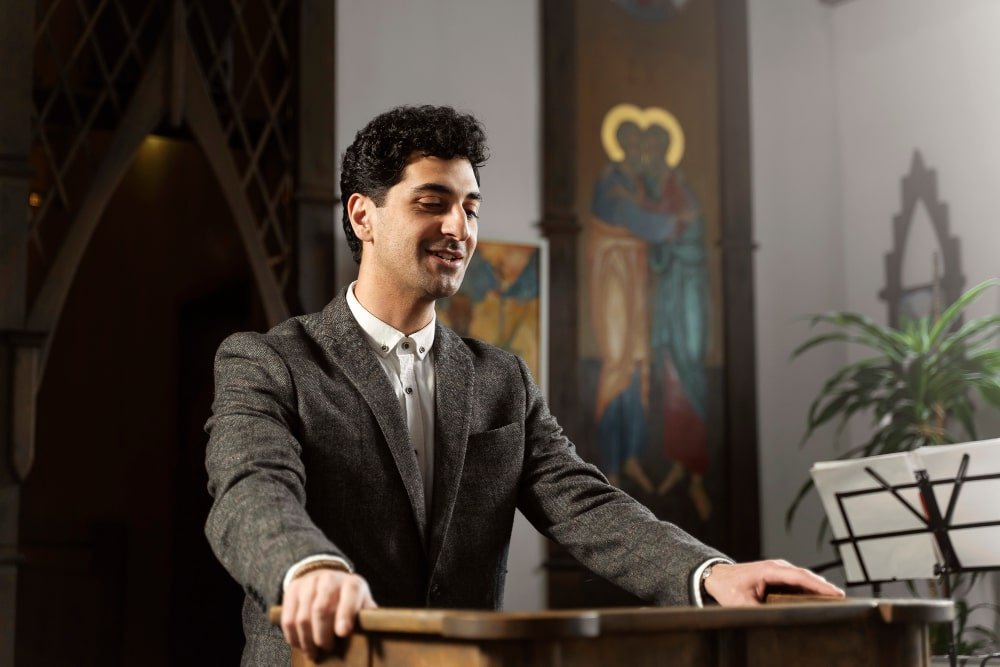
For years, U.S. religious organizations have operated in a perpetual state of uncertainty, relying on last-minute legislative extensions to keep their non-minister religious workers in the country. This disruption, caused by massive backlogs in the permanent visa system, has forced many dedicated spiritual leaders to abandon their ministries and leave their communities.
That unstable future may finally be changing. The bipartisan Religious Workforce Protection Act of 2025 (H.R. 2672 / S. 1298), introduced in the House and Senate in March and April 2025, represents the strongest effort yet to permanently stabilize both the temporary R-1 and permanent EB-4 programs.
Its passage would provide a critical lifeline for faith communities—from Catholic dioceses to Jewish synagogues and Islamic centers—allowing them to plan their staffing needs long-term without the annual fear of sunset deadlines.
The Problem: A Five-Year Cap Meets a Decade-Long Backlog
The core issue lies in the mismatch between temporary R-1 status and the backlog for the EB-4 Green Card:
-
R-1 Visa Limit: The temporary R-1 visa for religious workers is strictly capped at five years of continuous stay.
-
EB-4 Backlog: Due to country-specific limits, the waiting time for an approved EB-4 Green Card can currently stretch well over a decade for certain nationalities.
This means a religious worker who lawfully enters the U.S. and begins serving a community often reaches their five-year limit with their permanent residency application still years away from approval. Under current law, they are forced to leave the country for at least one year before they can reapply, devastating their ministries.
Key Provisions of the Protection Act
The Religious Workforce Protection Act (RWPA) provides targeted, commonsense solutions to bridge this gap, based on legal flexibility already available to other employment-based visa categories:
-
R-1 Extension Authority: It grants the Secretary of Homeland Security the discretion to extend an R-1 nonimmigrant status beyond the five-year cap. This extension would be granted until the religious worker receives a decision on their EB-4 Green Card application, ensuring continuity of service during long processing delays.
-
Limited Job Flexibility: It allows R-1 workers with pending EB-4 applications to change positions or move to a different religious institution within their denomination without having to restart their entire permanent residency process. This acknowledges the reality of promotions and transfers within large religious organizations.
-
Waiver of One-Year Bar: The bill retroactively exempts workers who were previously forced to depart the U.S. due to the five-year limit from the subsequent one-year foreign residence requirement, making it easier for them to return and resume their service once their Green Card is available.
Bipartisan Support Highlights Urgency
The RWPA has garnered strong bipartisan support from its sponsors (including Senator Tim Kaine (D-VA) and Senator Susan Collins (R-ME) in the Senate, and Representative Mike Carey (R-OH) and Representative Richard Neal (D-MA) in the House). This unified front underscores the recognition that this is not just an immigration issue, but a religious freedom and community stability issue.
Religious leaders across various denominations have thrown their support behind the bill, citing the critical role foreign-born priests, pastors, rabbis, and other workers play in filling staffing shortages, especially in rural and immigrant-heavy areas.
Conclusion
The Religious Workforce Protection Act is poised to deliver the long-term stability and fairness that religious organizations and their workers desperately need. Its successful passage would eliminate the constant threat of disruption caused by administrative backlogs and temporary visa limits. While the bill progresses through Congress, organizations must continue to meticulously manage their R-1 and EB-4 filings under the current rules. To navigate the complex interplay between the five-year R-1 limit and the pending EB-4 petition, and to strategically plan for the potential changes offered by the RWPA, contact Lforlaw today to connect with expert attorneys specializing in religious worker immigration.
Sources
-
S. 1298 / H.R. 2672 (119th Congress, 2025-2026): Religious Workforce Protection Act. (The official bills introduced in the Senate and House of Representatives).
-
U.S. Conference of Catholic Bishops (USCCB): Letter to Congress on the Religious Workforce Protection Act (April 2025, detailing the need for permanent stability).
-
Congressional Record (Various Dates, April 2025): Statements from sponsoring members detailing the adverse impact of the EB-4 backlog on communities.
-
USCIS Policy Manual: Official guidance on the R-1 five-year limit and EB-4 eligibility requirements.