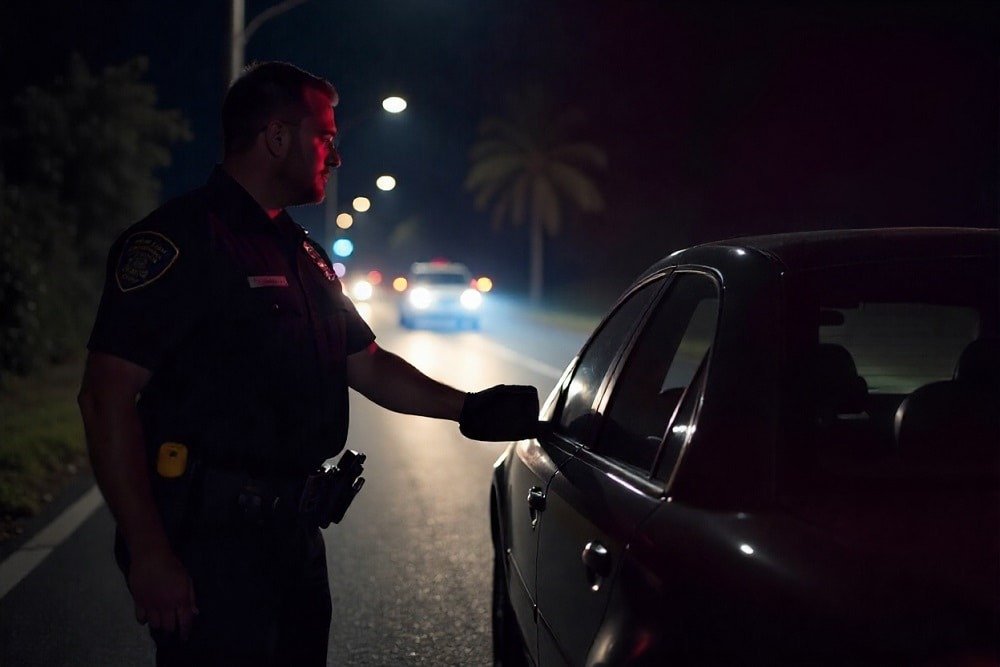
A traffic stop under suspicion of Driving Under the Influence (DUI) is a high-stress situation that has been fundamentally changed by technology in 2025. With every interaction likely being recorded by dashcams, bodycams, and sometimes even passive alcohol sensors, the evidence against you starts building the moment the blue lights turn on. Knowing your rights and the proper procedure is crucial for protecting your legal standing.
Phase 1: The Initial Pullover and Contact
The stop must be based on a concept called Reasonable Suspicion—meaning the officer must observe a specific, articulable reason (like speeding or weaving) to pull you over.
- Stay Calm and Visible: As soon as you see the lights, pull over safely, turn on your interior light, and place both hands on the steering wheel. This shows cooperation and prevents the officer from claiming they feared for their safety.
- Provide Required Documents: When the officer approaches, be polite. You are legally required to provide your driver’s license, registration, and proof of insurance upon request.
- Invoke Your Right to Silence Immediately: This is your most powerful right. If the officer asks you any incriminating questions, such as, “Have you been drinking tonight?” or “Where are you coming from?”, do not answer. A polite, firm response is key: “Officer, I prefer not to answer any questions without my attorney present.” Anything you say—even an innocent comment like “I had one beer with dinner”—can be used as evidence of impairment or to justify further investigation. Do not argue or elaborate.
Phase 2: The Field Sobriety Tests (FSTs)
If the officer still suspects impairment, they will ask you to exit the vehicle to perform Field Sobriety Tests (FSTs), such as the Walk-and-Turn, the One-Leg Stand, and the Horizontal Gaze Nystagmus (HGN) test.
- FSTs are Voluntary, Not Mandatory: You are not legally required to submit to roadside FSTs or the preliminary breath test (PBT) given at the scene. These tests are subjective, and factors like poor balance, medical conditions, certain footwear, or even nervousness can cause a sober person to “fail.”
- The Power of Refusal: There are generally no separate legal penalties for refusing these voluntary roadside tests. By respectfully declining, you prevent the officer from gathering subjective evidence that will be used to establish Probable Cause for an arrest.
- What to Say: Simply state, “Officer, I respectfully decline to perform any roadside tests.” The officer may try to persuade you, but remain firm and polite in your refusal. Be prepared, however, that the officer may still arrest you if they believe they have probable cause based on other observations (e.g., odor, slurred speech).
Phase 3: The Breathalyzer and Chemical Tests (Post-Arrest)
If you are arrested, you will be taken to the station and asked to submit to a chemical test (Breathalyzer, blood, or urine). This is where the crucial concept of Implied Consent comes into play.
- Implied Consent and Penalties: Every state has Implied Consent laws, which mean that by operating a vehicle, you have consented to a chemical test if you are lawfully arrested on suspicion of DUI. Refusing a post-arrest chemical test carries severe administrative penalties, most notably an automatic and immediate suspension of your driver’s license, often for a year or more for a first offense. This license suspension is separate from—and often worse than—any criminal penalty you might face.
- The Dilemma: Refusing the test prevents the state from getting a concrete Blood Alcohol Content (BAC) number, but it triggers the automatic license suspension and your refusal itself may be used against you in court as evidence of consciousness of guilt.
- The Legal Hail Mary: If arrested, your best action is to immediately invoke your right to counsel before making a decision on the chemical test. State clearly: “I am invoking my right to counsel and will not submit to any tests until I have spoken with my attorney.” Police must provide a reasonable opportunity for you to contact a lawyer before the test.
Post-Stop Action is Your Defense
Regardless of the outcome of the stop, your immediate next step is the most critical: contact a skilled DUI/DWI Defense Attorney. They will immediately review the stop’s legality, challenge the FST administration, examine the breathalyzer’s calibration records, and fight to protect your driving privileges and your freedom.
Contact Lforlaw today, and we will connect you with expert DUI/DWI defense attorneys who can provide the specialized guidance you need to protect your rights and challenge the evidence in your case.
Sources:
- U.S. Fifth and Fourth Amendments to the Constitution (Right to Remain Silent, Protection from Unreasonable Search)
- State-specific Implied Consent Laws (varying by jurisdiction)
- National Highway Traffic Safety Administration (NHTSA) Standards for Field Sobriety Testing
- Analysis of modern DUI detection technology and legal counsel advisories (2024-2025)